
A town that has always fed travellers
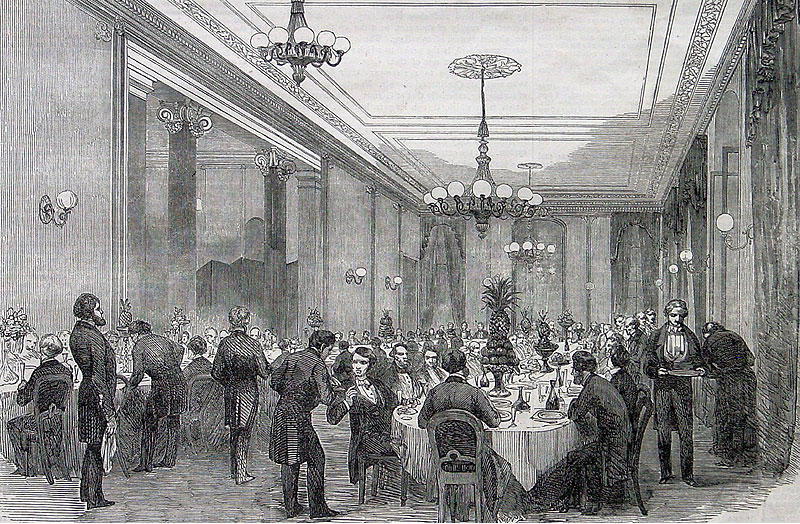
Dover has been feeding people on their way somewhere else for about two thousand years. The Roman Painted House, built around AD 200, may have been part of a mansio, an official inn or guesthouse for travellers using the port. In 1203 Hubert de Burgh founded the Maison Dieu to lodge pilgrims crossing from the Continent to Canterbury, and its brethren "practised hospitality to all strangers". In 1853 the South Eastern Railway opened the Lord Warden Hotel between its station and the Admiralty Pier, and its dining room served a stream of travellers that included Charles Dickens and William Makepeace Thackeray.
That history still shapes the place. Much of Dover's eating is done by people with a ferry to catch or a long drive ahead, so the town has always had plenty of quick, practical food alongside a smaller number of places for a long lunch or an evening out. Restaurants in Dover come and go, as they do in any port town, and this guide deliberately does not name or rank current businesses: recommendations of that kind go stale within a season. It describes where to look instead, and the older story behind the town's food and drink.
Where to eat in Dover
For anyone wondering where to eat in Dover, the town centre is the obvious starting point. The Market Square has been the heart of Dover since the Middle Ages, when St Martin's Fair was held there, and the streets running off it, Castle Street, Cannon Street and Biggin Street, hold most of the town's cafés and restaurants. Biggin Street, widened in late Victorian times, is now the main shopping street, and it is where daytime cafés are easiest to find. In the north-east corner of the square stood the bakers Igglesden and Graves, whose shop appears in Dickens's David Copperfield; the premises later became a tea room, a reminder that people have been stopping for refreshment on this corner for a very long time.
The seafront and the harbour are the second area for restaurants in Dover. Places along the promenade and around the marina trade on the view, and on a fine evening a table looking out over the harbour, with the castle floodlit on its hill, is hard to beat. Opening hours on the front tend to follow the season, so out of summer it is worth checking ahead.
Several of the main sights have their own refreshments. Dover Castle has cafés inside the walls, which matters because a full day there leaves little time to come down into the town and back. The National Trust visitor centre at Langdon Cliffs has a coffee shop at the start of the cliff walk. At Kearsney Abbey, on the edge of town, the surviving billiards room of the old house has long served as a café beside the lake. For current opening details of places like these, the operators' own sites and the district's tourism site, White Cliffs Country, are the places to check.
Some of the best places to eat in Dover are not restaurants at all. A picnic carried up to the Western Heights, onto the cliff top at Langdon, onto the sea wall at Samphire Hoe or into Connaught Park, whose upper promenade looks out across the valley to the castle, makes good use of the views that the town's tables mostly cannot offer. On a clear day the French coast is part of the scenery.
On busy summer weekends, and on evenings when a large cruise ship is in, booking ahead is sensible anywhere popular. Early-morning ferry passengers should not count on much being open before the first sailings.
Fish, samphire and the produce of East Kent
A port of this age was always a fishing town too. Before the medieval harbour silted up, the community at Warden Down at the mouth of the Eastbrook was a flourishing settlement of seafarers, fishermen and shipbuilders, and Dickens, describing Dover in A Tale of Two Cities, wrote that the air among the houses had "so strong a piscatory flavour that one might have supposed sick fish went up to be dipped in it". Fish is still the natural thing to look for on a Dover menu, and Dover sole carries the town's name around the world, having taken it from the port that supplied it to the London market.
The cliffs supply a more unusual ingredient. Rock samphire grows on the chalk, and gathering it from the cliff face was the "dreadful trade" that Shakespeare's Edgar describes in King Lear. It was once made into a pickle, though it is seldom gathered from the cliffs today. Further inland, East Kent is orchard, hop and farm country, and local fruit, cheese and wine turn up in Dover's shops and on its menus, particularly in summer and early autumn.
Pubs in Dover: the old inns and their names
Many pubs in Dover stand on sites that have been licensed for a very long time, and their names are a small history of the town. In Buckland, the Bull by Buckland Bridge stands in the centre of the old village and was known as the Rose and then the Three Horse Shoes before 1839. Further up the London Road, the Old Endeavour took its name from a privateer, the Endeavour, fitted out at Dover in 1746; the "Old" once distinguished it from a New Endeavour a little higher up the road. The Gate Inn on Crabble Hill stood beside the toll gate at the start of the turnpike to Canterbury, which was removed in 1871. These and other village landmarks are described on the page about Buckland.

Some of the old houses survive only in street names. Cherry Tree Avenue was named after the large cherry tree in the garden of the Cherry Tree Inn on London Road. The Black Horse Inn and its tea gardens, at the corner of what is now Tower Hamlets Road, were a popular resort with the townsfolk, not least on the days of public executions held at the nearby crossroads until 1823; it was sold in 1839 and the Eagle Tavern built on the site.
Pubs in Dover change hands and names as often as anywhere.
Whether a particular old pub is open today, under the same name or any name, is exactly the kind of thing that changes, and it is not listed here. East Kent has also become known for micropubs, small single-room bars often opened in former shops, so the newest places to drink in Dover may not look like pubs from the street at all.
The breweries that supplied Dover's pubs
For most of the nineteenth century Dover brewed its own beer. The largest firm was Leney's Phoenix Brewery in Dolphin Lane, off Castle Street, first recorded in 1740 and bought by Alfred Leney in 1859. Under Leney and his sons the business grew to own about 160 tied houses, mainly in East Kent, after taking over Flint & Co. of Canterbury in 1904. The phoenix was the firm's trade mark, and when Alfred Leney died in 1900 his pub tenants sent a wreath in that shape.

The smaller breweries had gone earlier. Kingsford's Windmill Brewery at Buckland, which may have used a windmill built in 1798 to pump water, had stopped brewing by 1889; its site is remembered in the name of Kingsford Court. Harding's Wellington Brewery, in a former paper mill on the Dour, closed in 1890. The Diamond Brewery on Folkestone Road and the Bulwark Hill Brewery opposite Archcliffe Fort both passed through several owners before closing around the turn of the century. All five are covered in the Dover breweries section.
The Lord Warden had a longer afterlife. Its celebrated ballroom was used for decades by local organisations for annual dinners and dances; in the Second World War the Royal Navy took the building over as HMS Wasp, headquarters of the Coastal Forces; afterwards it became railway offices and later, as Lord Warden House, offices for the port. The building is Grade II listed, and the listing notes that the ballroom interior, with its marble floor, Ionic columns and decorative plasterwork, survives largely complete.
The hotel trade followed a similar curve. The Burlington and the Grand were lost in the Second World War, and the Dover Stage Hotel, opened in 1957 on six floors of V-shaped struts overlooking the Granville Gardens and much used for dinners, dances and wedding receptions, was demolished in 1988. Its story, and what replaced it, is on the page about the Dover Stage Hotel. For things to see between meals, the guide to things to do in Dover gathers the rest of the town.