© www.dover-kent.co.uk 2024


Dover: Lock and Key of the Kingdom

Sea Bathing
In the early 19th Century sea bathing became fashionable for its supposed health giving properties. By the 1840s there were
two bathing establishments at Dover, situated between
Waterloo Crescent and Marine Parade on the Seafront. Here
patrons could bathe in baths filled with hot or cold sea water.
For the more adventurous souls there was always the sea itself.
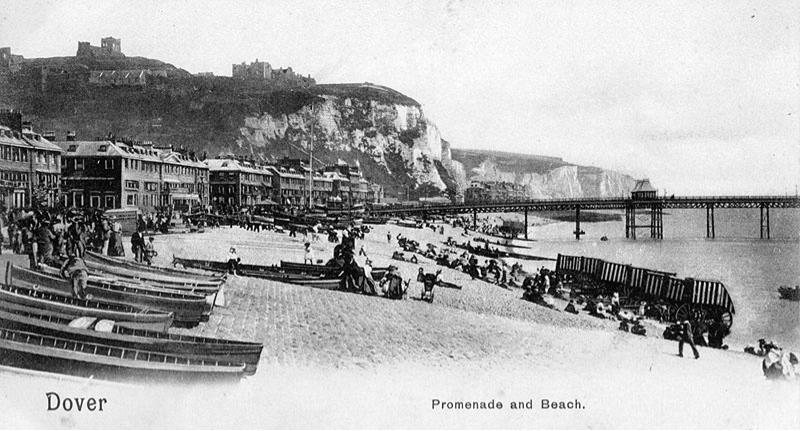
Bathing machines were used by Victorian ladies to preserve
their modesty, even though they went into the sea in
voluminous bathing costumes. The bathing machines were little
huts on wheels. The lady changed into her bathing costume in
the hut, which was then wheeled down into the sea, where the
lady could descend the steps straight into the water.
In 1878 new swimming baths and the old baths demolished to
make way for the Granville Gardens. This new establishment
was situated at the far end of Marine Parade. It had a large
swimming bath in the basement and a second bath was added
a few years later to cope with demand. Both baths were filled
with sea water. On the second floor there were private baths
and baths for medical purposes.
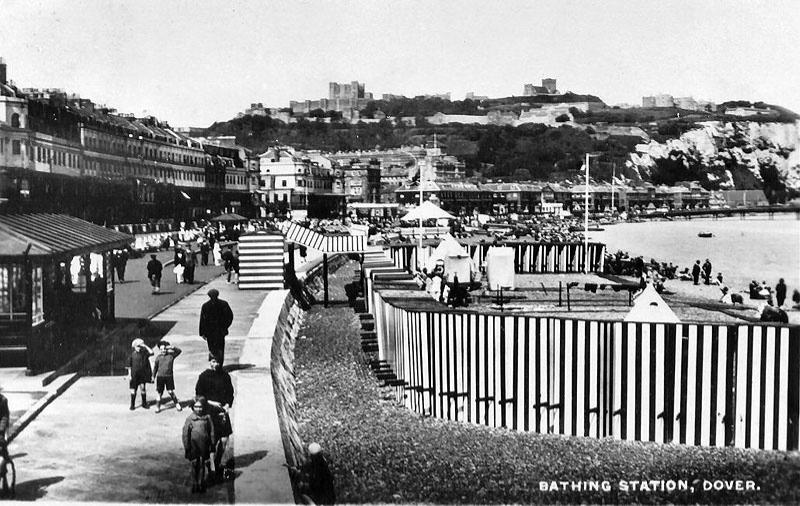
In the 1920s and 30s there was a bathing station on the beach
with changing cubicles. Those bathers who could not afford the
cost of the hire continued that time honoured British tradition of
struggling out of a wet bathing costume under a towel while
trying to preserve modesty.
During the Second World War the old swimming baths were
destroyed and the residents of Dover had to wait until the
opening of the new swimming pool in 1972.
its supposed health giving properties. By the 1840s there were
two bathing establishments at Dover, situated between
Waterloo Crescent and Marine Parade on the Seafront. Here
patrons could bathe in baths filled with hot or cold sea water.
For the more adventurous souls there was always the sea itself.
Bathing machines were used by Victorian ladies to preserve
their modesty, even though they went into the sea in
voluminous bathing costumes. The bathing machines were little
huts on wheels. The lady changed into her bathing costume in
the hut, which was then wheeled down into the sea, where the
lady could descend the steps straight into the water.
In 1878 new swimming baths and the old baths demolished to
make way for the Granville Gardens. This new establishment
was situated at the far end of Marine Parade. It had a large
swimming bath in the basement and a second bath was added
a few years later to cope with demand. Both baths were filled
with sea water. On the second floor there were private baths
and baths for medical purposes.
In the 1920s and 30s there was a bathing station on the beach
with changing cubicles. Those bathers who could not afford the
cost of the hire continued that time honoured British tradition of
struggling out of a wet bathing costume under a towel while
trying to preserve modesty.
During the Second World War the old swimming baths were
destroyed and the residents of Dover had to wait until the
opening of the new swimming pool in 1972.
its supposed health giving properties. By the 1840s there were
two bathing establishments at Dover, situated between
Waterloo Crescent and Marine Parade on the Seafront. Here
patrons could bathe in baths filled with hot or cold sea water.
For the more adventurous souls there was always the sea itself.
Bathing machines were used by Victorian ladies to preserve
their modesty, even though they went into the sea in
voluminous bathing costumes. The bathing machines were little
huts on wheels. The lady changed into her bathing costume in
the hut, which was then wheeled down into the sea, where the
lady could descend the steps straight into the water.
In 1878 new swimming baths and the old baths demolished to
make way for the Granville Gardens. This new establishment
was situated at the far end of Marine Parade. It had a large
swimming bath in the basement and a second bath was added
a few years later to cope with demand. Both baths were filled
with sea water. On the second floor there were private baths
and baths for medical purposes.
In the 1920s and 30s there was a bathing station on the beach
with changing cubicles. Those bathers who could not afford the
cost of the hire continued that time honoured British tradition of
struggling out of a wet bathing costume under a towel while
trying to preserve modesty.
During the Second World War the old swimming baths were
destroyed and the residents of Dover had to wait until the
opening of the new swimming pool in 1972.