

© www.dover-kent.co.uk 2024


Dover: Lock and Key of the Kingdom

Thomas Tallis
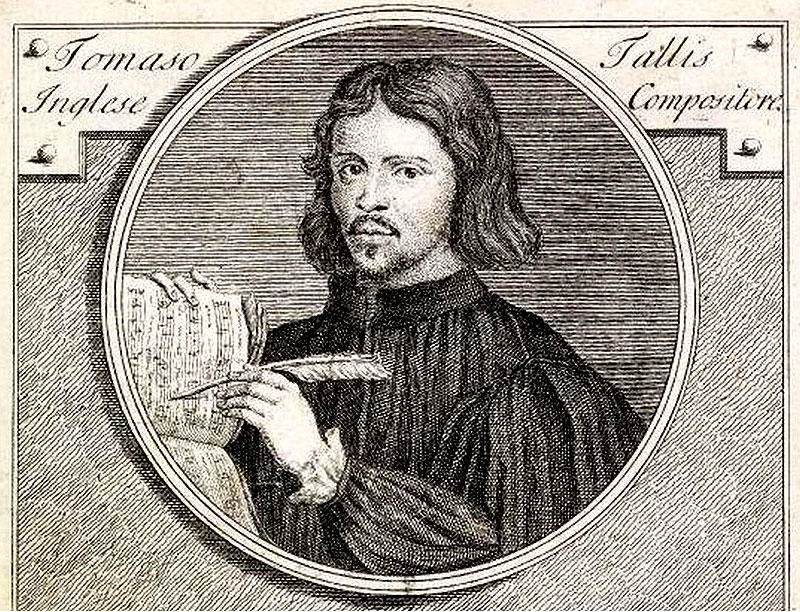
Thomas Tallis (1505? - 1585) was an English composer during the Renaissance Period in music (1400 - 1600). He was a
prolific composer of sacred music for both the Roman Catholic
and the Protestant churches. His career spanned four
monarchies: Henry VIII (with the dissolution of the
monasteries), Edward VI, Mary (who re-established
Catholicism) and Elizabeth I.
Relatively little is known about Tallis's life, particularly about
his early years. His year of birth is usually taken to be about
1505 making him eighty years old at his death on 23rd
November 1585; he had described himself as "very aged" eight
years before. Since his entire career was spent in London and
southern England he was probably born in the south, perhaps
in Kent. In any case this was the county of his first known
appointment, Dover Priory, and the location of the Manor of
Minster, the house later leased to him by Mary Tudor.
Tallis in Dover
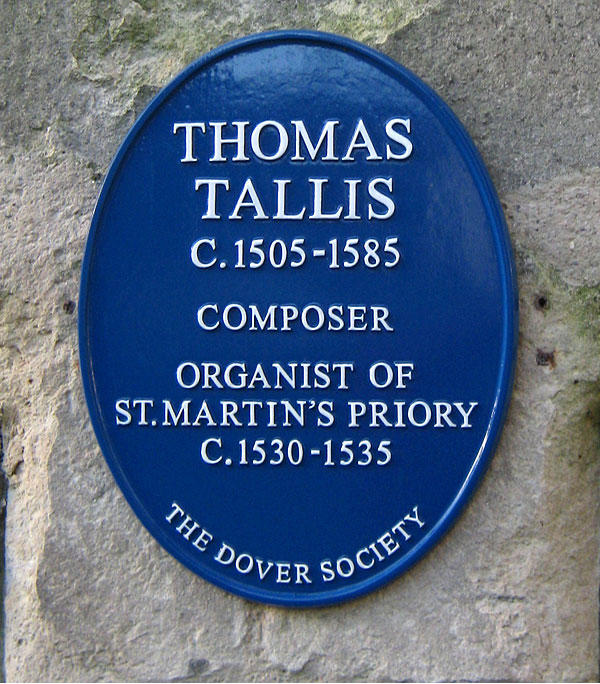
The first record of Tallis dates from 1532, as organist of Dover
Priory, a small Benedictine monastery consisting of about a
dozen monks. It is not know whether Tallis's duties were
restricted to organ-playing, or whether he also had the
opportunity to work with professional singers. The more
affluent monastic houses of the period certainly endeavoured
to participate in the fashionable cultivation of elaborate church
music by employing a small choir of professional lay singers;
such a choir, which was quite distinct from the monks' own
choir, would usually have performed in the Lady Chapel of the
monastery, because this was often the only part of the
monastic church to which the laity had access.
Dover Priory, however, was far from wealthy. In the early
1530s its annual income was about £170, less than a tenth of
that of a major Benedictine house, and it can hardly have been
in a position to spend lavishly on music. On the other hand,
the fact that the priory employed a lay organist at all could be
taken to imply quite a serious commitment to music. In
addition, Dover was a cell or dependent house of Canterbury
Cathedral, which was itself a Benedictine priory. The cathedral
had a long and lively musical tradition involving not only the
maintenance of a professional Lady Chapel choir but also the
encouragement of the monks' own musical talents; it seems
quite possible that this could have assisted the exploitation of
music at Dover. Even so, any choir available to Tallis at Dover
Priory must surely have been tiny. There seems to be no
record of Tallis's departure from Dover, but the priory itself was
dissolved in the autumn of 1535.
the Renaissance Period in music (1400 - 1600). He was a
prolific composer of sacred music for both the Roman Catholic
and the Protestant churches. His career spanned four
monarchies: Henry VIII (with the dissolution of the
monasteries), Edward VI, Mary (who re-established
Catholicism) and Elizabeth I.
Relatively little is known about Tallis's life, particularly about
his early years. His year of birth is usually taken to be about
1505 making him eighty years old at his death on 23rd
November 1585; he had described himself as "very aged" eight
years before. Since his entire career was spent in London and
southern England he was probably born in the south, perhaps
in Kent. In any case this was the county of his first known
appointment, Dover Priory, and the location of the Manor of
Minster, the house later leased to him by Mary Tudor.
Tallis in Dover
The first record of Tallis dates from 1532, as organist of Dover
Priory, a small Benedictine monastery consisting of about a
dozen monks. It is not know whether Tallis's duties were
restricted to organ-playing, or whether he also had the
opportunity to work with professional singers. The more
affluent monastic houses of the period certainly endeavoured
to participate in the fashionable cultivation of elaborate church
music by employing a small choir of professional lay singers;
such a choir, which was quite distinct from the monks' own
choir, would usually have performed in the Lady Chapel of the
monastery, because this was often the only part of the
monastic church to which the laity had access.
Dover Priory, however, was far from wealthy. In the early
1530s its annual income was about £170, less than a tenth of
that of a major Benedictine house, and it can hardly have been
in a position to spend lavishly on music. On the other hand,
the fact that the priory employed a lay organist at all could be
taken to imply quite a serious commitment to music. In
addition, Dover was a cell or dependent house of Canterbury
Cathedral, which was itself a Benedictine priory. The cathedral
had a long and lively musical tradition involving not only the
maintenance of a professional Lady Chapel choir but also the
encouragement of the monks' own musical talents; it seems
quite possible that this could have assisted the exploitation of
music at Dover. Even so, any choir available to Tallis at Dover
Priory must surely have been tiny. There seems to be no
record of Tallis's departure from Dover, but the priory itself was
dissolved in the autumn of 1535.
the Renaissance Period in music (1400 - 1600). He was a
prolific composer of sacred music for both the Roman Catholic
and the Protestant churches. His career spanned four
monarchies: Henry VIII (with the dissolution of the
monasteries), Edward VI, Mary (who re-established
Catholicism) and Elizabeth I.
Relatively little is known about Tallis's life, particularly about
his early years. His year of birth is usually taken to be about
1505 making him eighty years old at his death on 23rd
November 1585; he had described himself as "very aged" eight
years before. Since his entire career was spent in London and
southern England he was probably born in the south, perhaps
in Kent. In any case this was the county of his first known
appointment, Dover Priory, and the location of the Manor of
Minster, the house later leased to him by Mary Tudor.
Tallis in Dover
The first record of Tallis dates from 1532, as organist of Dover
Priory, a small Benedictine monastery consisting of about a
dozen monks. It is not know whether Tallis's duties were
restricted to organ-playing, or whether he also had the
opportunity to work with professional singers. The more
affluent monastic houses of the period certainly endeavoured
to participate in the fashionable cultivation of elaborate church
music by employing a small choir of professional lay singers;
such a choir, which was quite distinct from the monks' own
choir, would usually have performed in the Lady Chapel of the
monastery, because this was often the only part of the
monastic church to which the laity had access.
Dover Priory, however, was far from wealthy. In the early
1530s its annual income was about £170, less than a tenth of
that of a major Benedictine house, and it can hardly have been
in a position to spend lavishly on music. On the other hand,
the fact that the priory employed a lay organist at all could be
taken to imply quite a serious commitment to music. In
addition, Dover was a cell or dependent house of Canterbury
Cathedral, which was itself a Benedictine priory. The cathedral
had a long and lively musical tradition involving not only the
maintenance of a professional Lady Chapel choir but also the
encouragement of the monks' own musical talents; it seems
quite possible that this could have assisted the exploitation of
music at Dover. Even so, any choir available to Tallis at Dover
Priory must surely have been tiny. There seems to be no
record of Tallis's departure from Dover, but the priory itself was
dissolved in the autumn of 1535.
Later Life
Tallis appears in records again in 1537-8 in London, where he is employed (it is not clear whether as a singer or as organist) by the
parish church of St Mary-at-Hill in Billingsgate, a little to the west of the Tower of London. The next reference to Tallis is in 1540 at the
Augustinian abbey of Holy Cross at Waltham Abbey in Essex where he was a senior gentleman. On March 23, 1540, Waltham became
the last English abbey to be dissolved. After the dissolution of the monasteries Tallis was a Lay Clerk (i.e. a singing gentleman) at
Canterbury Cathedral.
Tallis’s final appointment was as a senior gentleman at the Chapel Royal from around 1543 onwards. During his time in the royal
household Tallis served four monarchs, Henry VIII to 1547, Edward VI from 1547 to 1553, Mary I from 1553 to 1558 and Elizabeth I
from 1558 onwards.
Thomas Tallis was fortunate in that he was in Queen Elizabeth's favour although he was a Catholic during a period of religious unrest in
English history, resulting in the state religion of England switching from Catholic to Protestant. In 1575, Queen Elizabeth granted Tallis
and William Byrd (Tallis’s pupil) a monopoly in England on printing music. He died on 23rd November 1585 and was buried in St.
Alphege’s Church in Greenwich.
Tallis’s Music
Tallis’s early works were written for the Sarum rite, the liturgy in use in England until the Reformation. The music is large ritual music
for the Catholic mass and office hours. The Reformation and with it the new prayer book of 1549 created the need for simpler music
and settings of vernacular texts, a need to which Tallis was quick to respond.
The accession of Mary Tudor, who re-introduced the Catholic rite, enabled Tallis to return to the large scale English Catholic style of
composition, although works from this period clearly show Tallis’s more developed style and the first signs of continental influence
which was to affect all English composers in the second half of the 16th century.
The act of settlement introduced by Elizabeth in 1559 abolished the Catholic rite for ever and Tallis reverted to writing English services
and anthems for public use, though he continued to produce settings of Latin texts which were allowed for devotional use. In all this,
Tallis demonstrated a most remarkable versatility, changing and adapting his style to suit the prevailing political environment. Viewed
as a whole his music holds up a mirror to the political and religious changes of the sixteenth century.
Tallis appears in records again in 1537-8 in London, where he is employed (it is not clear whether as a singer or as organist) by the
parish church of St Mary-at-Hill in Billingsgate, a little to the west of the Tower of London. The next reference to Tallis is in 1540 at the
Augustinian abbey of Holy Cross at Waltham Abbey in Essex where he was a senior gentleman. On March 23, 1540, Waltham became
the last English abbey to be dissolved. After the dissolution of the monasteries Tallis was a Lay Clerk (i.e. a singing gentleman) at
Canterbury Cathedral.
Tallis’s final appointment was as a senior gentleman at the Chapel Royal from around 1543 onwards. During his time in the royal
household Tallis served four monarchs, Henry VIII to 1547, Edward VI from 1547 to 1553, Mary I from 1553 to 1558 and Elizabeth I
from 1558 onwards.
Thomas Tallis was fortunate in that he was in Queen Elizabeth's favour although he was a Catholic during a period of religious unrest in
English history, resulting in the state religion of England switching from Catholic to Protestant. In 1575, Queen Elizabeth granted Tallis
and William Byrd (Tallis’s pupil) a monopoly in England on printing music. He died on 23rd November 1585 and was buried in St.
Alphege’s Church in Greenwich.
Tallis’s Music
Tallis’s early works were written for the Sarum rite, the liturgy in use in England until the Reformation. The music is large ritual music
for the Catholic mass and office hours. The Reformation and with it the new prayer book of 1549 created the need for simpler music
and settings of vernacular texts, a need to which Tallis was quick to respond.
The accession of Mary Tudor, who re-introduced the Catholic rite, enabled Tallis to return to the large scale English Catholic style of
composition, although works from this period clearly show Tallis’s more developed style and the first signs of continental influence
which was to affect all English composers in the second half of the 16th century.
The act of settlement introduced by Elizabeth in 1559 abolished the Catholic rite for ever and Tallis reverted to writing English services
and anthems for public use, though he continued to produce settings of Latin texts which were allowed for devotional use. In all this,
Tallis demonstrated a most remarkable versatility, changing and adapting his style to suit the prevailing political environment. Viewed
as a whole his music holds up a mirror to the political and religious changes of the sixteenth century.


