

© www.dover-kent.co.uk 2024


Dover: Lock and Key of the Kingdom

The Cinque Ports
The name comes from the Norman French referring to the original five ports, thus Cinque is pronounced as "SINK" and not "SANK" in this case.
Confessor when Hastings, Romney, Hythe, Dover and Sandwich assumed responsibility for 'ship
service'. This was a special arrangement between these towns and the King whereby in return for
the provision of ships and men for 15 days free service a year to the Crown the town's Portsmen
received many privileges.
the Crown and the Confederation was increased in size. Winchelsea and Rye became head ports
in their own right and other towns were allowed to join as 'limbs' or 'members' under a Head
Port.
taxation and legal affairs. The Portsmen had their own courts, could judge and punish criminals,
levy tolls and claim any wreckage found on the sea or on shore. Their special honours at court
gave them the right to carry a canopy over the King at his Coronation and sit at his side at the
Coronation feast. In addition they controlled the yearly Yarmouth Herring Fair, a tradition that
frequently brought them into conflict with the Portsmen of Norfolk. Such rights and privileges
gave considerable power in the mediæval world, and made the Portsmen difficult to control.
activities of the Portsmen. From the early 13th Century the position was combined with that of
Constable of Dover Castle. Appointed by the King, the Lord Warden had to represent both the
King's and the Portsmen's interests.
The post of Lord Warden is held for life, and in modern times it is bestowed as an honour,
rewarding long and faithful service to the Crown. Well known recent holders of the title include
Sir Winston Churchill, Sir Robert Menzies and Her Majesty Queen Elizabeth The Queen Mother.
The present Lord Warden is former naval commander Admiral Lord Michael Boyce. His
appointment was announced on 29 July 2004. This news ended months of speculation over who
would take the ceremonial title and names previously mentioned included Prince Andrew, John
Major, Nelson Mandela and Bill Clinton. Lord Boyce had a distinguished naval career and rose
through the ranks to become First Sea Lord, Chief of the Naval Staff and Chief of the Defence
Staff. On his retirement in 2003 he was made a Life Peer with the title Baron Boyce of Pimlico in
the City of Westminster.
pronounced as "SINK" and not "SANK" in this case.
Confessor when Hastings, Romney, Hythe, Dover and Sandwich assumed responsibility for 'ship
service'. This was a special arrangement between these towns and the King whereby in return for
the provision of ships and men for 15 days free service a year to the Crown the town's Portsmen
received many privileges.
the Crown and the Confederation was increased in size. Winchelsea and Rye became head ports
in their own right and other towns were allowed to join as 'limbs' or 'members' under a Head
Port.
taxation and legal affairs. The Portsmen had their own courts, could judge and punish criminals,
levy tolls and claim any wreckage found on the sea or on shore. Their special honours at court
gave them the right to carry a canopy over the King at his Coronation and sit at his side at the
Coronation feast. In addition they controlled the yearly Yarmouth Herring Fair, a tradition that
frequently brought them into conflict with the Portsmen of Norfolk. Such rights and privileges
gave considerable power in the mediæval world, and made the Portsmen difficult to control.
activities of the Portsmen. From the early 13th Century the position was combined with that of
Constable of Dover Castle. Appointed by the King, the Lord Warden had to represent both the
King's and the Portsmen's interests.
The post of Lord Warden is held for life, and in modern times it is bestowed as an honour,
rewarding long and faithful service to the Crown. Well known recent holders of the title include
Sir Winston Churchill, Sir Robert Menzies and Her Majesty Queen Elizabeth The Queen Mother.
The present Lord Warden is former naval commander Admiral Lord Michael Boyce. His
appointment was announced on 29 July 2004. This news ended months of speculation over who
would take the ceremonial title and names previously mentioned included Prince Andrew, John
Major, Nelson Mandela and Bill Clinton. Lord Boyce had a distinguished naval career and rose
through the ranks to become First Sea Lord, Chief of the Naval Staff and Chief of the Defence
Staff. On his retirement in 2003 he was made a Life Peer with the title Baron Boyce of Pimlico in
the City of Westminster.
pronounced as "SINK" and not "SANK" in this case.
Origins
The Confederation of the Cinque Ports was formed around 1050 in the time of Edward the
Confessor when Hastings, Romney, Hythe, Dover and Sandwich assumed responsibility for 'ship
service'. This was a special arrangement between these towns and the King whereby in return for
the provision of ships and men for 15 days free service a year to the Crown the town's Portsmen
received many privileges.
Limbs or Members
By the 12th Century the original five ports were unable to carry out all the services needed by
the Crown and the Confederation was increased in size. Winchelsea and Rye became head ports
in their own right and other towns were allowed to join as 'limbs' or 'members' under a Head
Port.
The Portsmen and their Rights
The Portsmen had full rights to self-government allowing them the organisation of their own
taxation and legal affairs. The Portsmen had their own courts, could judge and punish criminals,
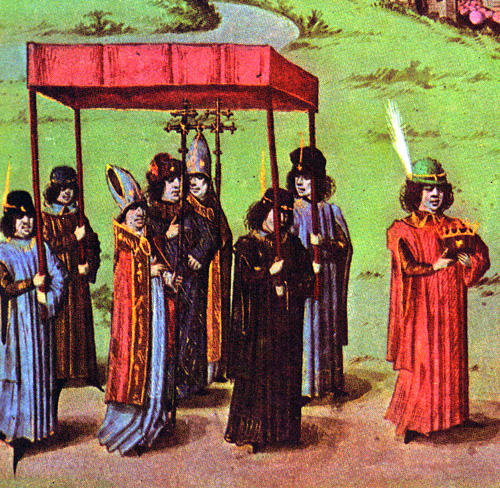
levy tolls and claim any wreckage found on the sea or on shore. Their special honours at court
gave them the right to carry a canopy over the King at his Coronation and sit at his side at the
Coronation feast. In addition they controlled the yearly Yarmouth Herring Fair, a tradition that
frequently brought them into conflict with the Portsmen of Norfolk. Such rights and privileges
gave considerable power in the mediæval world, and made the Portsmen difficult to control.
The Lords Warden
The position of Lord Warden of the Cinque Ports was created in an attempt to control the
activities of the Portsmen. From the early 13th Century the position was combined with that of
Constable of Dover Castle. Appointed by the King, the Lord Warden had to represent both the
King's and the Portsmen's interests.
The post of Lord Warden is held for life, and in modern times it is bestowed as an honour,
rewarding long and faithful service to the Crown. Well known recent holders of the title include
Sir Winston Churchill, Sir Robert Menzies and Her Majesty Queen Elizabeth The Queen Mother.
The present Lord Warden is former naval commander Admiral Lord Michael Boyce. His
appointment was announced on 29 July 2004. This news ended months of speculation over who
would take the ceremonial title and names previously mentioned included Prince Andrew, John
Major, Nelson Mandela and Bill Clinton. Lord Boyce had a distinguished naval career and rose
through the ranks to become First Sea Lord, Chief of the Naval Staff and Chief of the Defence
Staff. On his retirement in 2003 he was made a Life Peer with the title Baron Boyce of Pimlico in
the City of Westminster.

Decline of the Cinque Ports
The Cinque Ports reached the peak of their power in the 13th Century, acting on many occasions for the King but also suffering some
disgrace for unofficial piracy, robbery and pillage that had become commonplace activities of many of the Portsmen.
In the 14th Century however, the ports began to decline as changes in the coastline caused many Cinque Ports to become
unnavigable or even in some cases completely landlocked. In 1588 the Cinque Ports fleet carried out its last action against the
Spanish Armada. In 1663 the Cinque Ports bailiffs made their final appearance at the Yarmouth Herring Fair.
Dover as a Cinque Port
Dover is now the only Head Port to retain an important harbour. In the thirteenth century the combination of the office of Constable
of Dover Castle with that of Lord Warden made Dover the headquarters of this important representative of the King. His involvement
with the port's affairs continued long after the Confederation had lost power. In 1606 when Dover Harbour was transferred by Royal
Charter to the newly formed Dover Harbour Board, the then Lord Warden was elected head of the board.
Dover has long been the place where the ceremonies for the installation of a new Lord Warden have taken place. These used to take
place on the Western Heights at the Bredenstone - a lump of masonry which is all that remains of a second Roman Pharos. More
recently the ceremony has taken place at the site of the ancient Priory of St Martin, now within the grounds of Dover College.


