© www.dover-kent.co.uk 2024


Dover: Lock and Key of the Kingdom

The Seafront
What is know generally as the Seafront by the inhabitants of Dover does in fact have four separate names for its different
stretches. From the Prince of Wales Pier to the Eastern Docks,
the sections are the Esplanade, Waterloo Crescent, Marine
Parade and East Cliff.
Prior to 1817 the site of the Seafront was a ridge of shingle
which had begun to accumulate about 1500. On this ridge was
Dover’s original ropewalk, where ships’ ropes were made. The
area was also used as a gathering ground for cobblestones,
with which the Town Commissioners of 1778 paved the streets
of Dover.
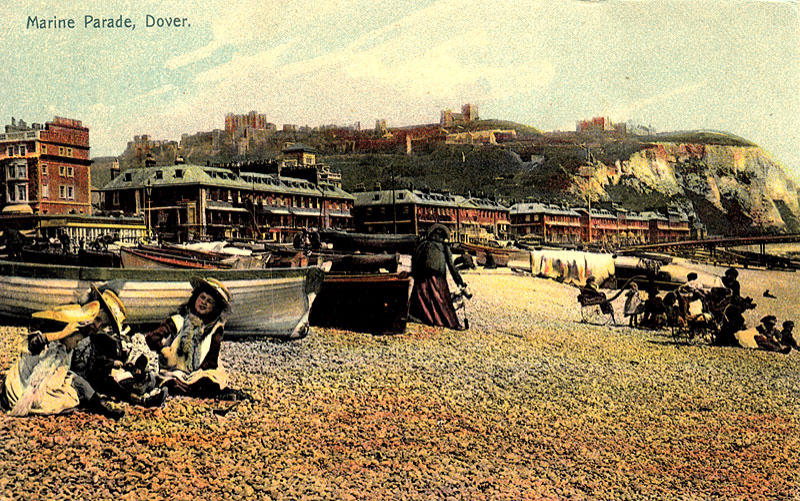
The decision to start building on the shingle bank was taken by
the Harbour Commissioners in 1816, and Marine Parade was
completed in 1820. The houses on the Esplanade were
commenced in 1833, and Waterloo Crescent in 1834. The
houses at East Cliff span this whole building period and beyond,
into the 1840s.
In 1850, due to erosion of the shoreline caused by the change
in currents after the construction of the Admiralty Pier, the
Harbour Board commenced the building of a strong sea wall
along the Esplanade. This was extended along Waterloo
Crescent and Marine Parade. East Cliff was not under the
jurisdiction of the Harbour Board and was left with little
protection other than shingle, and it soon became necessary to
build sea defences here too. These were built by the Borough
Council in 1878.
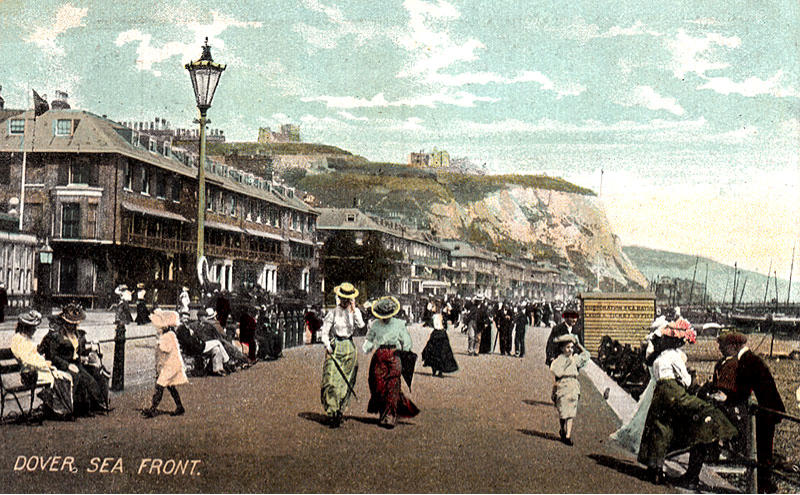
The sweeping curve of promenade created by the sea wall has
been popular ever since with local and tourists alike. In
Victorian times there were sea bathing establishments and
bathing machines. Large hotels like the Grand and the
Burlington were opened to cater for the increasing tourist trade.
Concerts could be enjoyed in the Granville Gardens and, for a
short while, the Promenade Pier was another attraction on the
Seafront.
The Seafront suffered serious damage in the Second World War.
In the late 1950s the houses of Marine Parade were cleared to
make way for the new Gateway Flats, an unfortunate
development of council flats out of scale and character with the
surviving Victorian buildings. In spite of this the Seafront still
provides and excellent promenade with marvellous views of the
Castle and the busy harbour.
Dover does in fact have four separate names for its different
stretches. From the Prince of Wales Pier to the Eastern Docks,
the sections are the Esplanade, Waterloo Crescent, Marine
Parade and East Cliff.
Prior to 1817 the site of the Seafront was a ridge of shingle
which had begun to accumulate about 1500. On this ridge was
Dover’s original ropewalk, where ships’ ropes were made. The
area was also used as a gathering ground for cobblestones,
with which the Town Commissioners of 1778 paved the streets
of Dover.
The decision to start building on the shingle bank was taken by
the Harbour Commissioners in 1816, and Marine Parade was
completed in 1820. The houses on the Esplanade were
commenced in 1833, and Waterloo Crescent in 1834. The
houses at East Cliff span this whole building period and beyond,
into the 1840s.
In 1850, due to erosion of the shoreline caused by the change
in currents after the construction of the Admiralty Pier, the
Harbour Board commenced the building of a strong sea wall
along the Esplanade. This was extended along Waterloo
Crescent and Marine Parade. East Cliff was not under the
jurisdiction of the Harbour Board and was left with little
protection other than shingle, and it soon became necessary to
build sea defences here too. These were built by the Borough
Council in 1878.
The sweeping curve of promenade created by the sea wall has
been popular ever since with local and tourists alike. In
Victorian times there were sea bathing establishments and
bathing machines. Large hotels like the Grand and the
Burlington were opened to cater for the increasing tourist trade.
Concerts could be enjoyed in the Granville Gardens and, for a
short while, the Promenade Pier was another attraction on the
Seafront.
The Seafront suffered serious damage in the Second World War.
In the late 1950s the houses of Marine Parade were cleared to
make way for the new Gateway Flats, an unfortunate
development of council flats out of scale and character with the
surviving Victorian buildings. In spite of this the Seafront still
provides and excellent promenade with marvellous views of the
Castle and the busy harbour.
Dover does in fact have four separate names for its different
stretches. From the Prince of Wales Pier to the Eastern Docks,
the sections are the Esplanade, Waterloo Crescent, Marine
Parade and East Cliff.
Prior to 1817 the site of the Seafront was a ridge of shingle
which had begun to accumulate about 1500. On this ridge was
Dover’s original ropewalk, where ships’ ropes were made. The
area was also used as a gathering ground for cobblestones,
with which the Town Commissioners of 1778 paved the streets
of Dover.
The decision to start building on the shingle bank was taken by
the Harbour Commissioners in 1816, and Marine Parade was
completed in 1820. The houses on the Esplanade were
commenced in 1833, and Waterloo Crescent in 1834. The
houses at East Cliff span this whole building period and beyond,
into the 1840s.
In 1850, due to erosion of the shoreline caused by the change
in currents after the construction of the Admiralty Pier, the
Harbour Board commenced the building of a strong sea wall
along the Esplanade. This was extended along Waterloo
Crescent and Marine Parade. East Cliff was not under the
jurisdiction of the Harbour Board and was left with little
protection other than shingle, and it soon became necessary to
build sea defences here too. These were built by the Borough
Council in 1878.
The sweeping curve of promenade created by the sea wall has
been popular ever since with local and tourists alike. In
Victorian times there were sea bathing establishments and
bathing machines. Large hotels like the Grand and the
Burlington were opened to cater for the increasing tourist trade.
Concerts could be enjoyed in the Granville Gardens and, for a
short while, the Promenade Pier was another attraction on the
Seafront.
The Seafront suffered serious damage in the Second World War.
In the late 1950s the houses of Marine Parade were cleared to
make way for the new Gateway Flats, an unfortunate
development of council flats out of scale and character with the
surviving Victorian buildings. In spite of this the Seafront still
provides and excellent promenade with marvellous views of the
Castle and the busy harbour.