© www.dover-kent.co.uk 2024


Dover: Lock and Key of the Kingdom

Kearsney Abbey
Following the Norman Conquest, the Manor of Kearsney was granted to a Shropshire landowner, Jeffrey de Say, in exchange
for men from his estates to help maintain and garrison Dover
Castle. It passed through various other owners before coming
into local hands. Its first local owner was Ralph Tokes, Mayor of
Dover from 1445-1449, and Member of Parliament for Dover
three times.
In 1790 the estate was purchased by the Fectors, local
merchants and bankers, for the sum of £72,000. In 1820 John
Minet Fector (who was later to become Member of Parliament
for Dover) decided to have a more spacious and impressive
building erected, which was completed by 1822. Much of the
dressed stone work was acquired from old buildings which had
been demolished for road widening in Dover, and possibly also
from the mediaeval town wall and gate houses. John Minet
Fector misleadingly called his new home 'Kearsney Abbey'
despite the fact that it had never been a monastic building.
After John Minet Fector's surprise defeat in the mayoral election
of 1837, the family decided to sell the estate and move away
from the area. The property changed hands a number of times
during the latter half of the 19th century and the first half of
the 20th, and was used at various times as a private boarding
school, an Augustinian convent and a nursing home, as well as
a private residence.
The last private owners were the Collier family, who owned it
until the beginning of the Second World War, although they had
made several attempts to sell the property before the war. In
1937 the estate was listed as comprising area of over 27 acres,
the Abbey itself, laundry, dairy, orangery, stables and garage,
10 cottages, farm buildings and parkland. At that time the
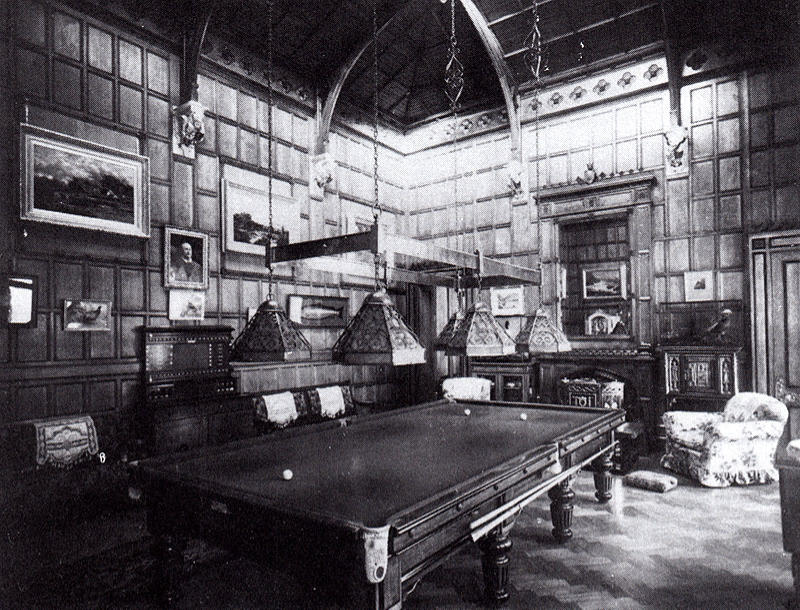
accommodation with in the Abbey itself consisted of a hall,
dining, drawing, breakfast and billiards rooms, library, study,
boudoir, 15 bed and dressing rooms, and 4 bathrooms.
During the Second World War the War Department
commandeered the Abbey for use as an A.T.S. operations
establishment and H.Q. of No.2 Searchlight Regiment. After the
war Dover Borough Council bought the Abbey and 25 acres of
land for the sum of £10,000. In 1959 the advanced stages of
dry rot were discovered in the house and it was demolished,
except for the billiards room which survives as a café. The
Abbey grounds were greatly improved in the mid 1970s and it
now provides a fine public park on the outskirts of the town.
granted to a Shropshire landowner, Jeffrey de Say, in exchange
for men from his estates to help maintain and garrison Dover
Castle. It passed through various other owners before coming
into local hands. Its first local owner was Ralph Tokes, Mayor of
Dover from 1445-1449, and Member of Parliament for Dover
three times.
In 1790 the estate was purchased by the Fectors, local
merchants and bankers, for the sum of £72,000. In 1820 John
Minet Fector (who was later to become Member of Parliament
for Dover) decided to have a more spacious and impressive
building erected, which was completed by 1822. Much of the
dressed stone work was acquired from old buildings which had
been demolished for road widening in Dover, and possibly also
from the mediaeval town wall and gate houses. John Minet
Fector misleadingly called his new home 'Kearsney Abbey'
despite the fact that it had never been a monastic building.
After John Minet Fector's surprise defeat in the mayoral election
of 1837, the family decided to sell the estate and move away
from the area. The property changed hands a number of times
during the latter half of the 19th century and the first half of
the 20th, and was used at various times as a private boarding
school, an Augustinian convent and a nursing home, as well as
a private residence.
The last private owners were the Collier family, who owned it
until the beginning of the Second World War, although they had
made several attempts to sell the property before the war. In
1937 the estate was listed as comprising area of over 27 acres,
the Abbey itself, laundry, dairy, orangery, stables and garage,
10 cottages, farm buildings and parkland. At that time the
accommodation with in the Abbey itself consisted of a hall,
dining, drawing, breakfast and billiards rooms, library, study,
boudoir, 15 bed and dressing rooms, and 4 bathrooms.
During the Second World War the War Department
commandeered the Abbey for use as an A.T.S. operations
establishment and H.Q. of No.2 Searchlight Regiment. After the
war Dover Borough Council bought the Abbey and 25 acres of
land for the sum of £10,000. In 1959 the advanced stages of
dry rot were discovered in the house and it was demolished,
except for the billiards room which survives as a café. The
Abbey grounds were greatly improved in the mid 1970s and it
now provides a fine public park on the outskirts of the town.
granted to a Shropshire landowner, Jeffrey de Say, in exchange
for men from his estates to help maintain and garrison Dover
Castle. It passed through various other owners before coming
into local hands. Its first local owner was Ralph Tokes, Mayor of
Dover from 1445-1449, and Member of Parliament for Dover
three times.
In 1790 the estate was purchased by the Fectors, local
merchants and bankers, for the sum of £72,000. In 1820 John
Minet Fector (who was later to become Member of Parliament
for Dover) decided to have a more spacious and impressive
building erected, which was completed by 1822. Much of the
dressed stone work was acquired from old buildings which had
been demolished for road widening in Dover, and possibly also
from the mediaeval town wall and gate houses. John Minet
Fector misleadingly called his new home 'Kearsney Abbey'
despite the fact that it had never been a monastic building.
After John Minet Fector's surprise defeat in the mayoral election
of 1837, the family decided to sell the estate and move away
from the area. The property changed hands a number of times
during the latter half of the 19th century and the first half of
the 20th, and was used at various times as a private boarding
school, an Augustinian convent and a nursing home, as well as
a private residence.
The last private owners were the Collier family, who owned it
until the beginning of the Second World War, although they had
made several attempts to sell the property before the war. In
1937 the estate was listed as comprising area of over 27 acres,
the Abbey itself, laundry, dairy, orangery, stables and garage,
10 cottages, farm buildings and parkland. At that time the
accommodation with in the Abbey itself consisted of a hall,
dining, drawing, breakfast and billiards rooms, library, study,
boudoir, 15 bed and dressing rooms, and 4 bathrooms.
During the Second World War the War Department
commandeered the Abbey for use as an A.T.S. operations
establishment and H.Q. of No.2 Searchlight Regiment. After the
war Dover Borough Council bought the Abbey and 25 acres of
land for the sum of £10,000. In 1959 the advanced stages of
dry rot were discovered in the house and it was demolished,
except for the billiards room which survives as a café. The
Abbey grounds were greatly improved in the mid 1970s and it
now provides a fine public park on the outskirts of the town.